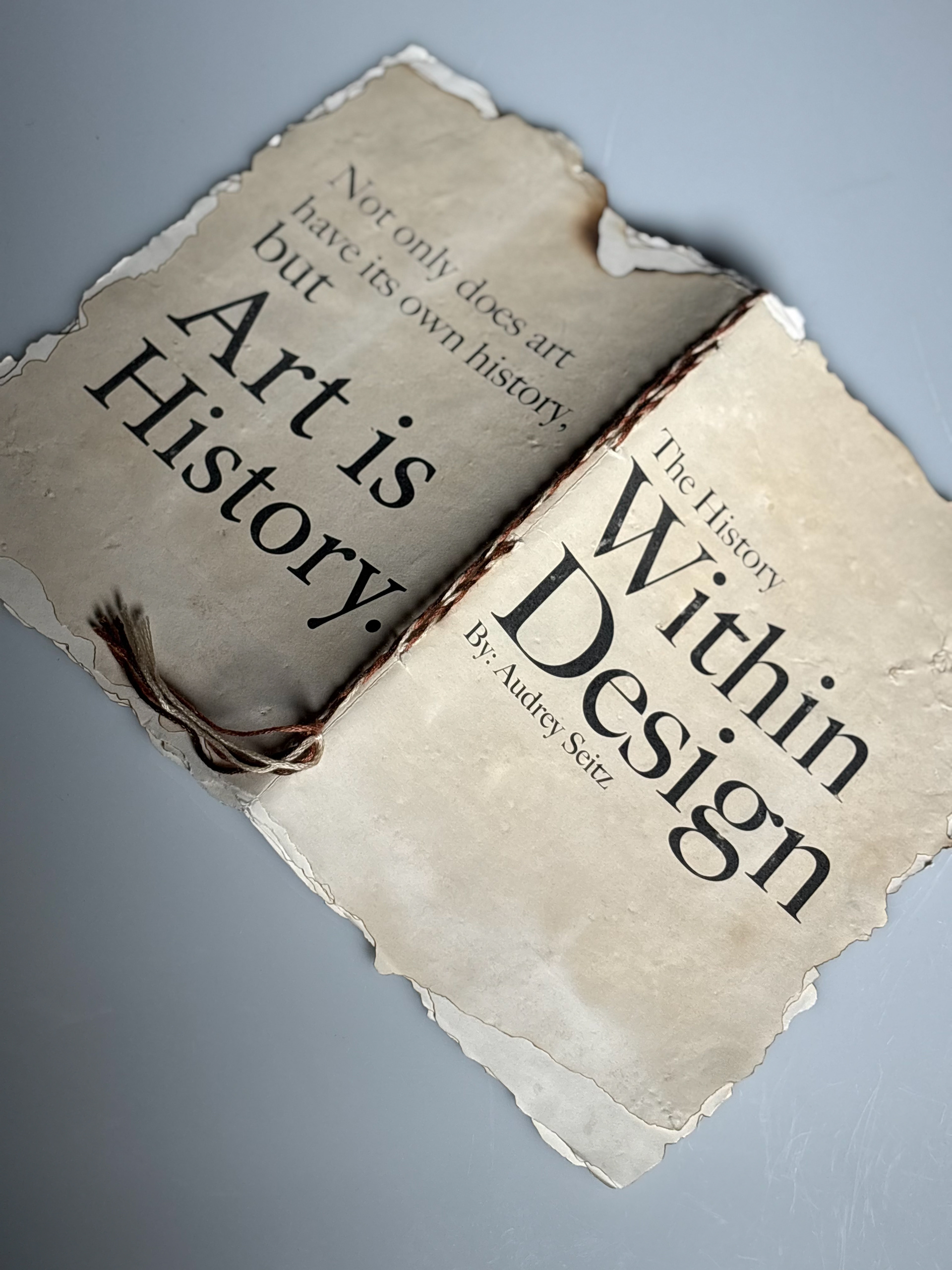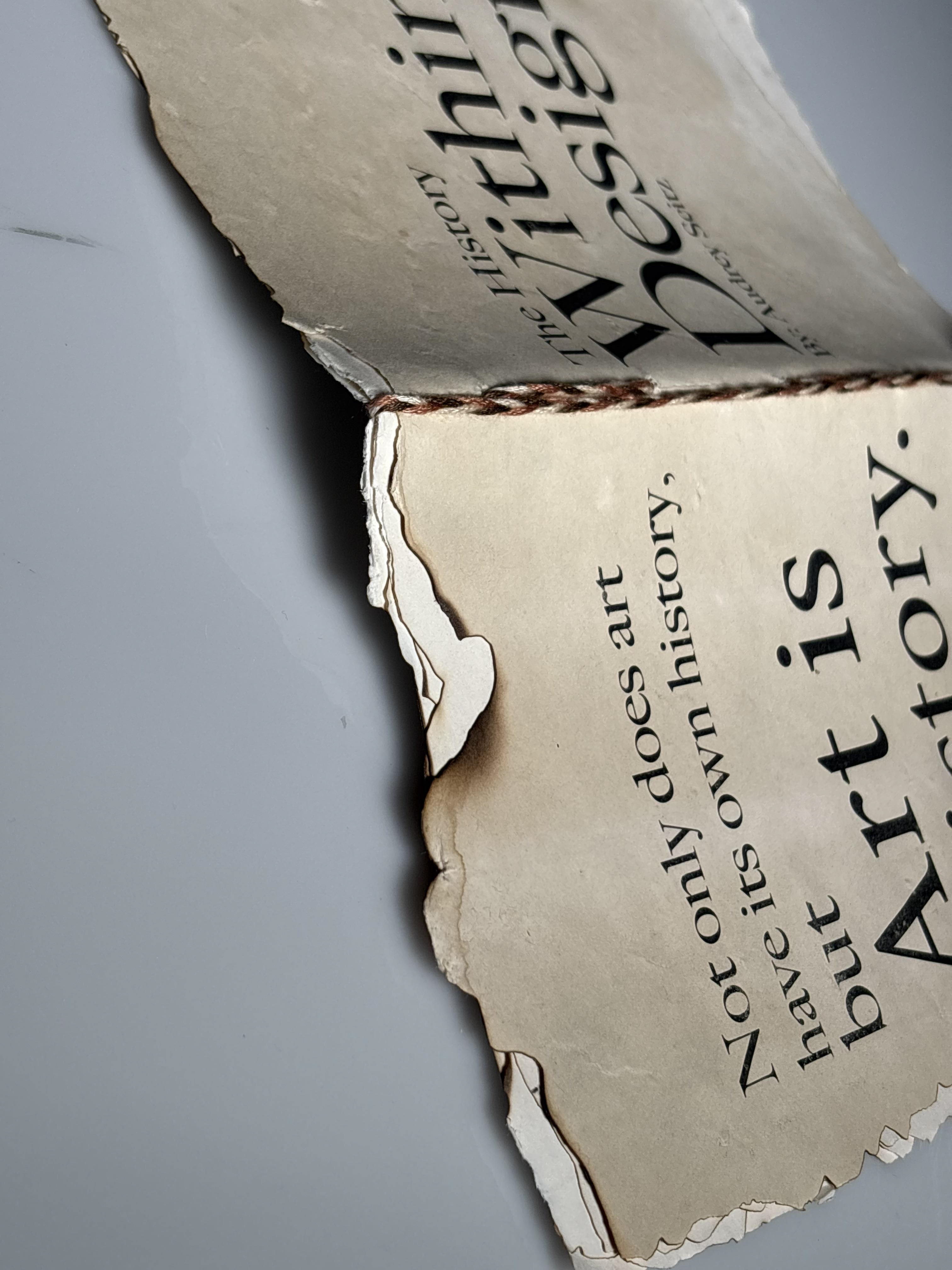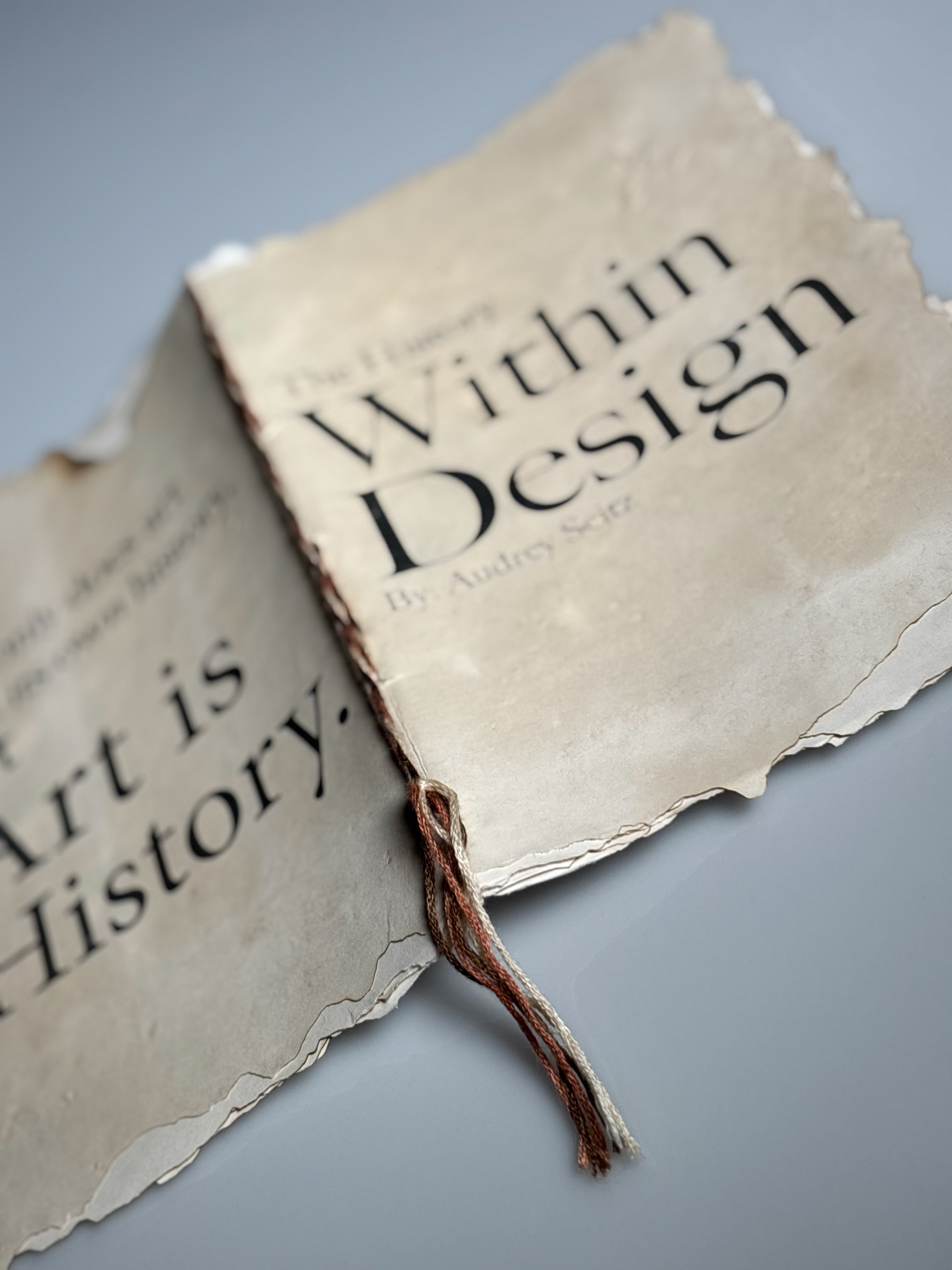
This project is a handcrafted booklet exploring the concept that art is history, designed to evoke a sense of antiquity through both visual and tactile elements. I focused on expressive typography to convey the narrative, carefully selecting typefaces and hierarchy to guide the reader through the content. The booklet’s design incorporates coffee-stained pages, burned edges, and a braided binding to create a worn, historical aesthetic, bridging the gap between visual storytelling and physical form. This project allowed me to experiment with typography, layout, and materiality, demonstrating how design choices can enhance the meaning and experience of a printed piece.
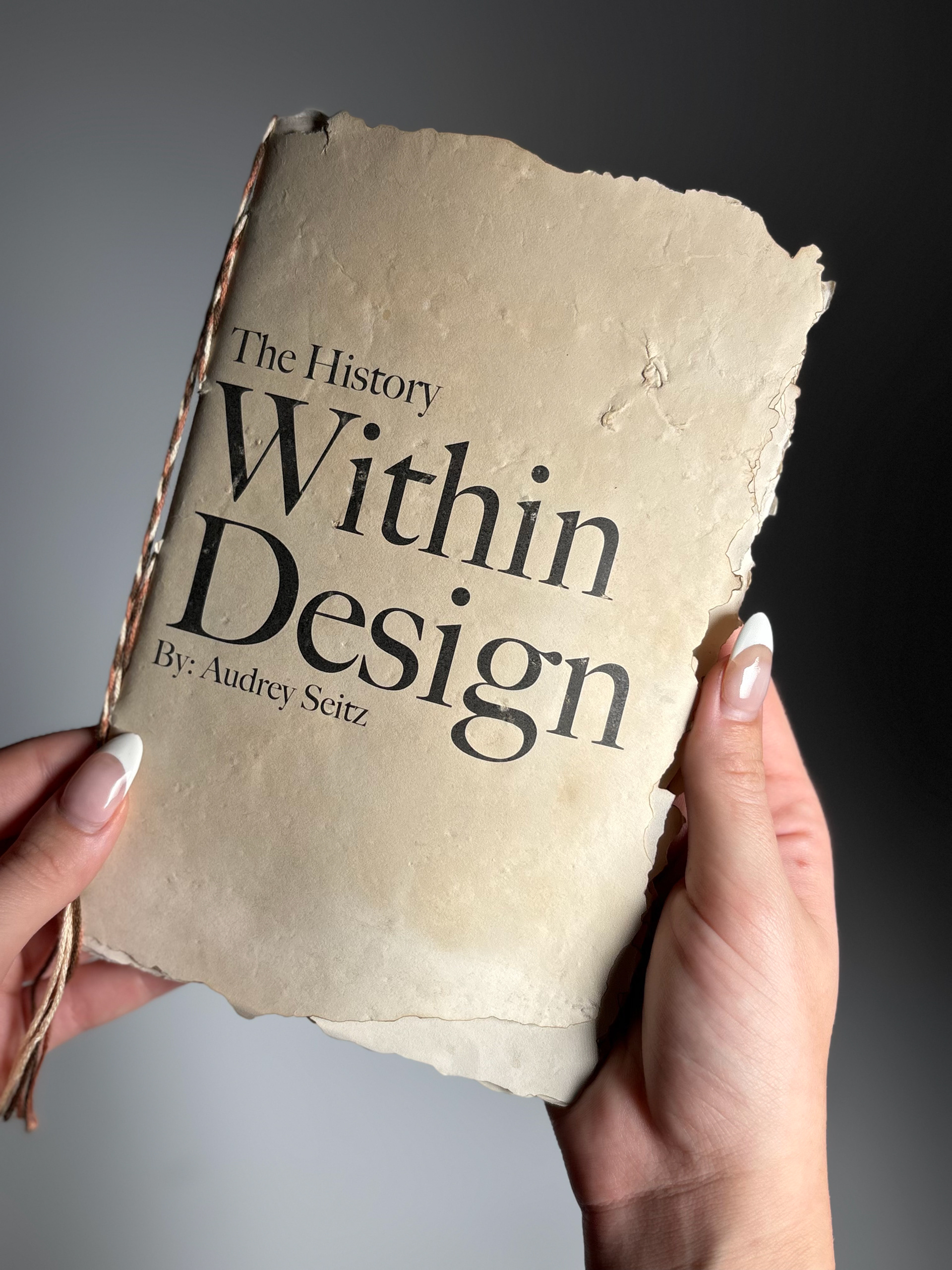

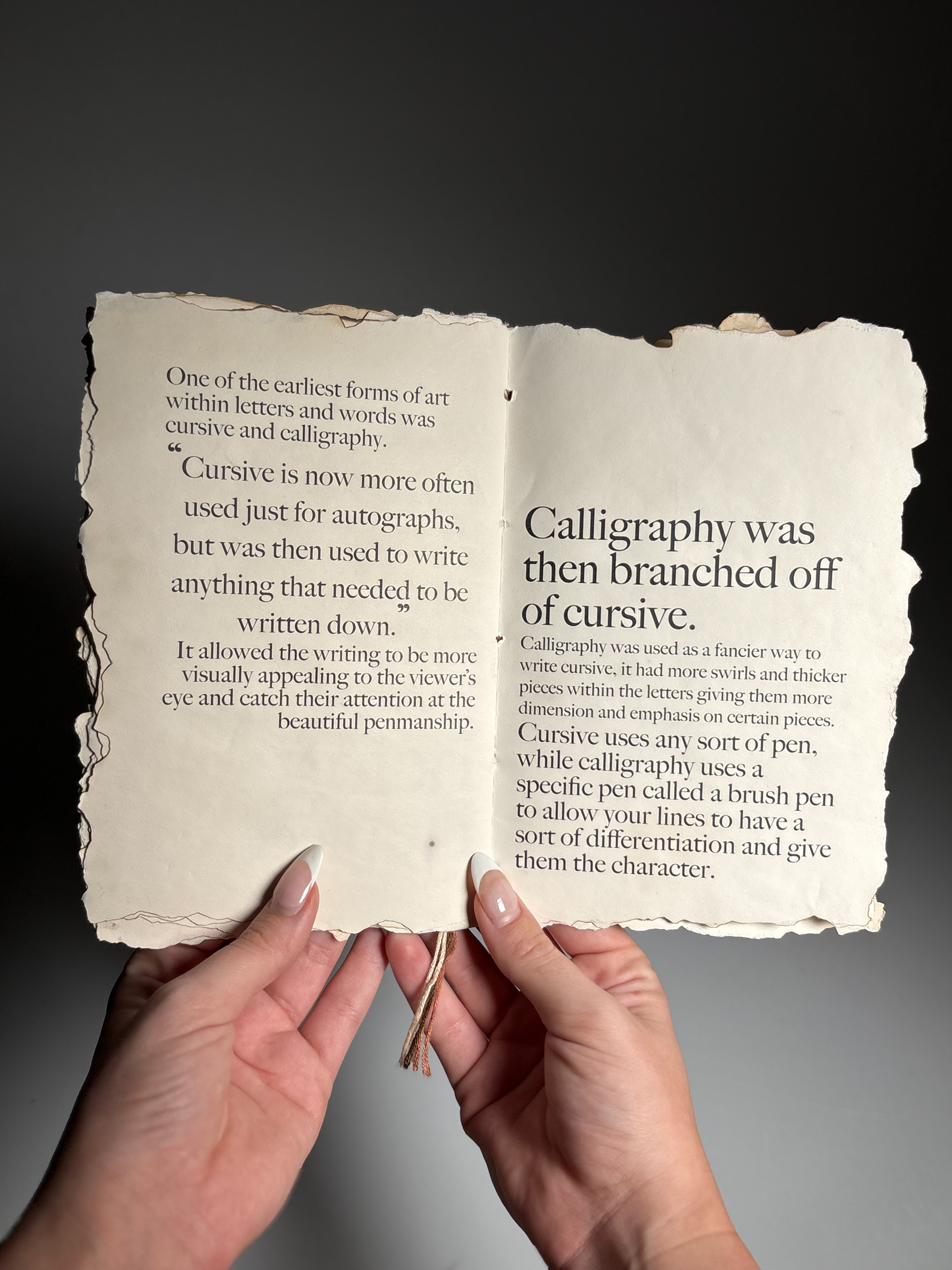
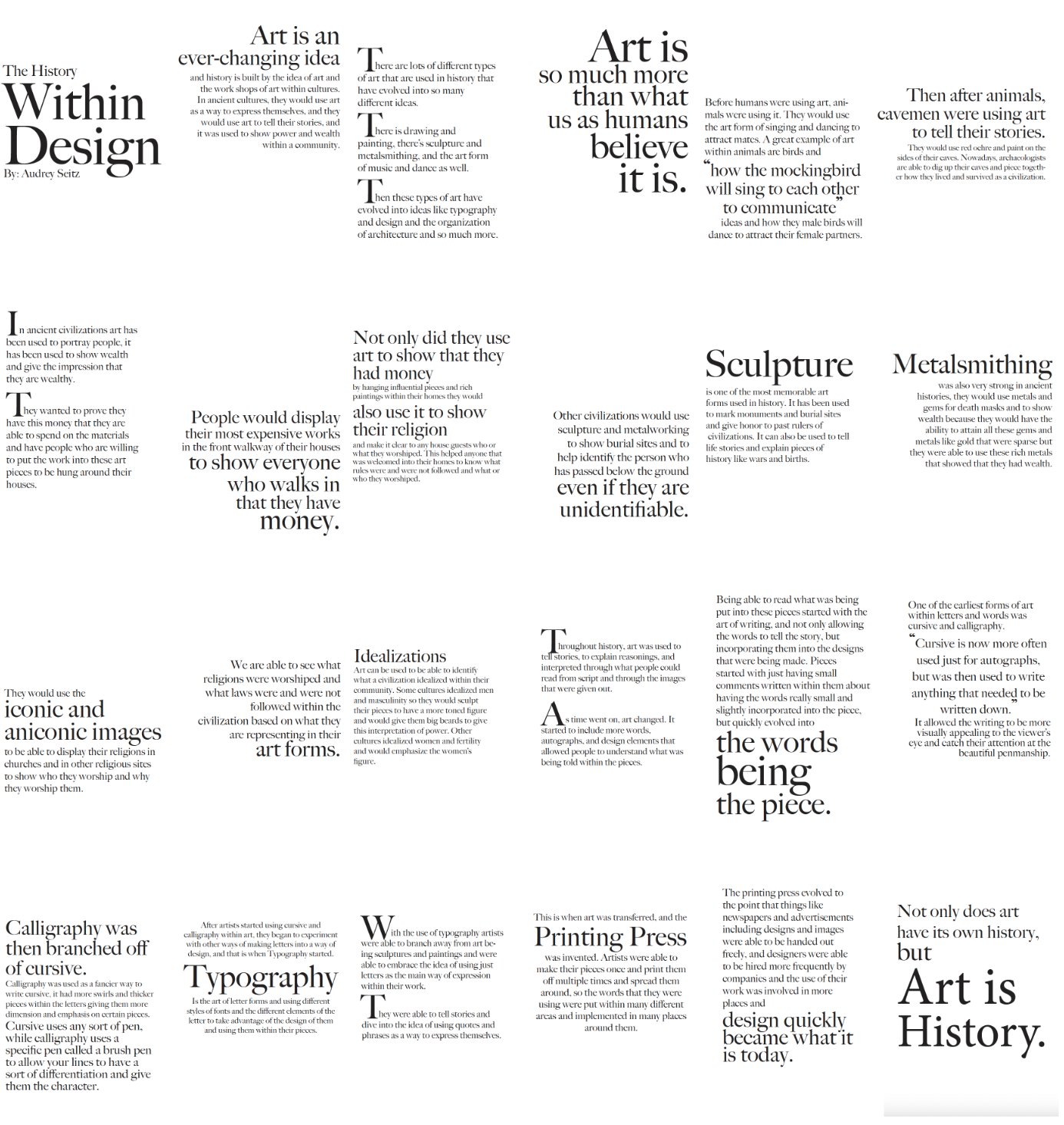
Building on this concept, the booklet explores how art functions as a living record of history, evolving across time while preserving the stories, emotions, and perspectives of different eras. I approached the design by studying how artistic styles shift through historical stages, from early, raw forms of visual storytelling to more structured and refined typographic systems, then translated that progression into the pacing and layout of the book itself. Each section reflects a different “stage” of history, using changes in typography, texture, and composition to mirror how art has developed as both documentation and expression. The distressed materials, such as coffee-stained pages and burned edges, reinforce the feeling of age and memory, while the braided binding emphasizes craftsmanship and tradition. By intentionally layering these evolving design choices, the booklet becomes more than a static object—it acts as a visual timeline that demonstrates how art continuously adapts to reflect the world around it, preserving history while simultaneously reshaping how it is understood.